Here is the arithmetic nobody enjoys hearing at a Charlotte clinic. If you attend physical therapy twice a week for an hour, that is two hours of guided work. The remaining waking hours of the week, well over a hundred of them, belong to you, your habits, and your home exercise program. Tissue adapts to what it is asked to do repeatedly, and twice a week is a whisper compared to a short session done daily. The visit is where the plan is set and corrected. The home program is where the plan happens.
That is not a scolding; it is how rehabilitation is designed. Understanding the design makes the exercises easier to keep.
What home exercises are actually doing
Early in a plan, the exercises are usually about restoring motion and waking muscles back up. After an injury or surgery, muscles around the area often inhibit, meaning they stop firing on time even though they are intact, and simple, specific movements retrain that timing. Later, the program shifts toward load: progressively asking the tissue to handle more, because strength and tendon health are built by graded demand, not by rest.
Each exercise on your sheet has a job in that sequence, which is why swapping in random movements from the internet is a poor trade. The internet does not know your irritability level, your surgical precautions, or which of your muscles tested weak at the evaluation.
The adherence checklist that actually works
- Anchor the exercises to an existing daily habit: after breakfast, after the shower, during the evening news.
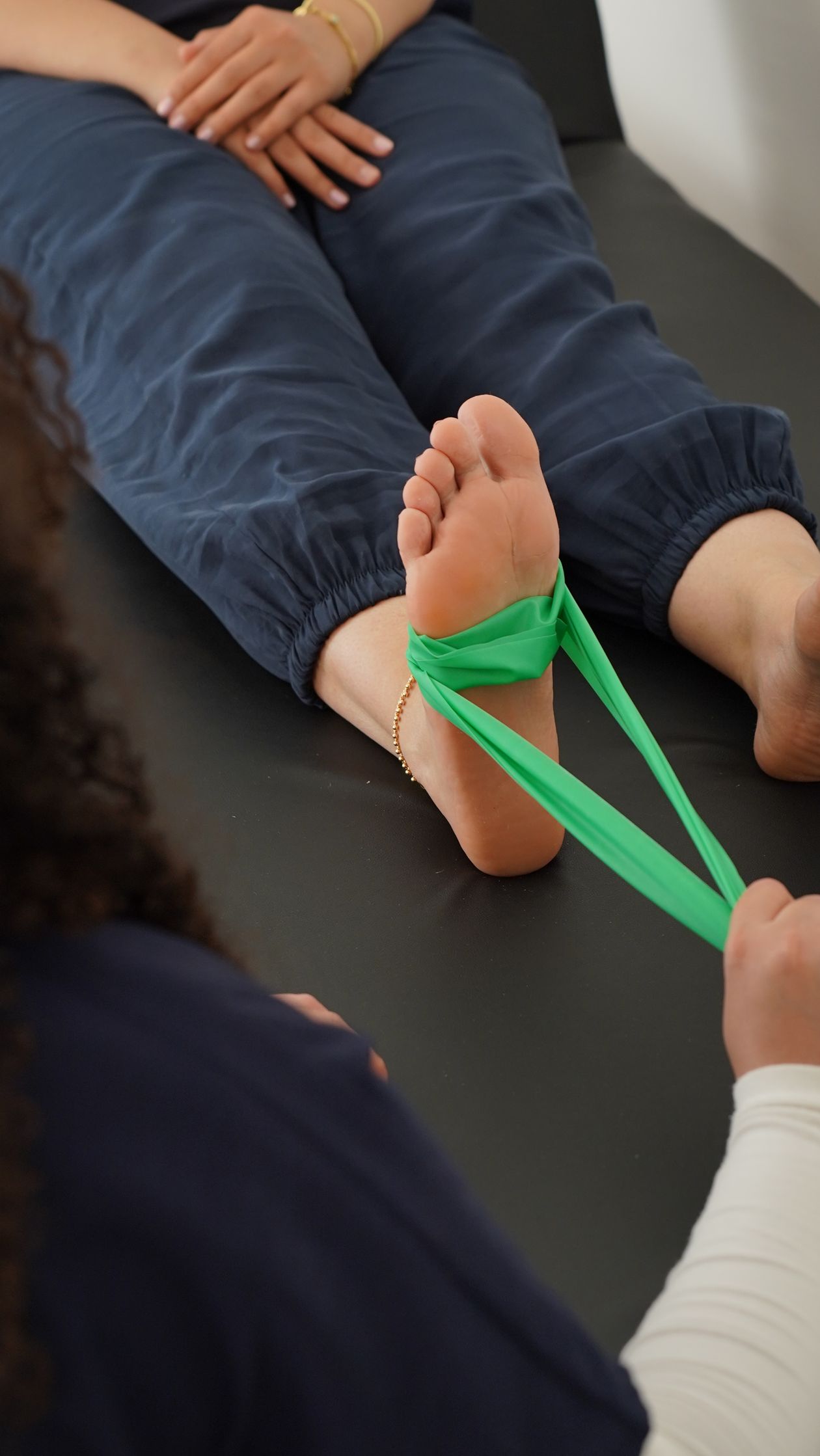
- Keep the equipment visible where the exercises happen, not in a closet.
- Do the short version on bad days rather than skipping entirely; the streak matters more than any single session.
- Write down what you did and what it felt like, in numbers where you can: reps, resistance, pain during and after.
- Note anything that stays sore beyond the next morning and report it at the next visit instead of quietly dropping the exercise.
- Ask for a phone video of yourself doing each new exercise correctly before you leave the clinic.
- Re-read the form cues weekly; technique drifts fastest on the exercises that feel easy.
How to read pain during home exercise
The question every patient asks is whether it should hurt. The useful rule most therapists teach is about timing rather than an absolute ban. Mild discomfort during an exercise that settles back to baseline within a day is generally acceptable and often expected when weak tissue starts working again. Pain that is sharp, that changes how you move to avoid it, or that leaves you clearly worse the next morning is the program telling you the dose is too big right now. That is not failure; it is dosage information, and reporting it precisely is how the plan gets tuned.
What you should not do is silently quit the exercise that talks back, because the talking one is frequently aimed at the exact deficit the evaluation found.

The plateau talk
Progress in therapy is rarely a straight line. Strength and motion gains come in steps, with flat weeks between, and pain usually quiets in patches rather than all at once. The home log matters most exactly here, because feelings say nothing is happening while the numbers, two more reps, a heavier band, ten more degrees, say otherwise. Bring the log. In a Charlotte summer, also expect heat and humidity to make evening sessions feel harder than morning ones; scheduling the home program for the cool part of your day is a legitimate adjustment, not an excuse.
The patients who finish therapy strongest are seldom the ones with the most clinic hours. They are the ones whose kitchen floor saw them every day.
One more practical point: tell your therapist what your home actually offers. A hallway for walking drills, a bottom stair for step work, a kitchen counter for balance support, a dining chair at the right height. Programs built around furniture you own get done; programs that assume a home gym quietly shrink to the exercises that need nothing, which are rarely the ones you were prescribed.
Common questions
How long should a home program take each day?
Most run fifteen to thirty minutes once established. If yours routinely takes far longer, tell your therapist; programs get trimmed to the movements that matter most rather than padded.
What if I miss several days?
Restart at a slightly easier level than where you stopped and tell your therapist. A gap is data about your schedule or your symptoms, and the plan can be rebuilt around both.
Can I keep going to the gym or playing my sport meanwhile?
Often partly, yes, with specific substitutions and limits. Ask rather than guessing; therapists would rather modify your activity than ban it, because modified activity keeps the rest of you strong.
Photos in this guide are representative stock images.
← All guides from Elite Physical Therapy← Back to Elite Physical Therapy